

ClickUp vs Monday.com
ClickUp vs monday.com: Which Should You Choose?
ClickUp and Monday.com both have a free plan, both are rated Medium difficulty, and both bill per user or seat on an annual basis. The split is in what each page lists as everyday work. ClickUp lists sprints, generated documents, and status reports. monday.com lists operations tracking, marketing workflows, and resource planning. The choice depends on whether your team builds and ships projects or runs recurring processes across departments.
Choose based on how you work
Choose ClickUp if…
Choose ClickUp if the same platform should manage projects and run context-aware AI workflows around existing tasks and documents.
View ClickUp details →Choose monday.com if…
Choose monday.com if your team wants visual boards, dashboards, automation, and customizable workflows that can adapt across departments.
View monday.com details →See the products side by side
Compare the actual interfaces to see how each tool approaches everyday work.
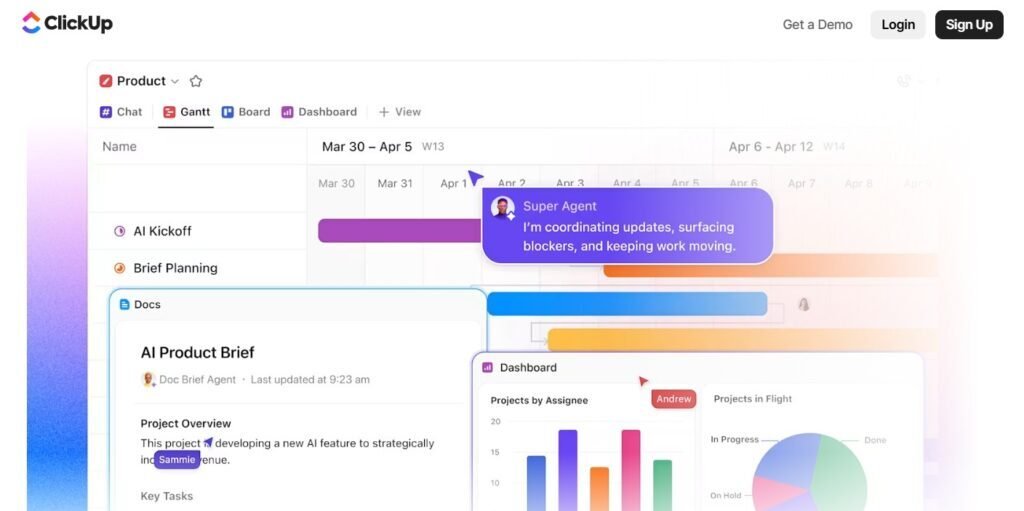
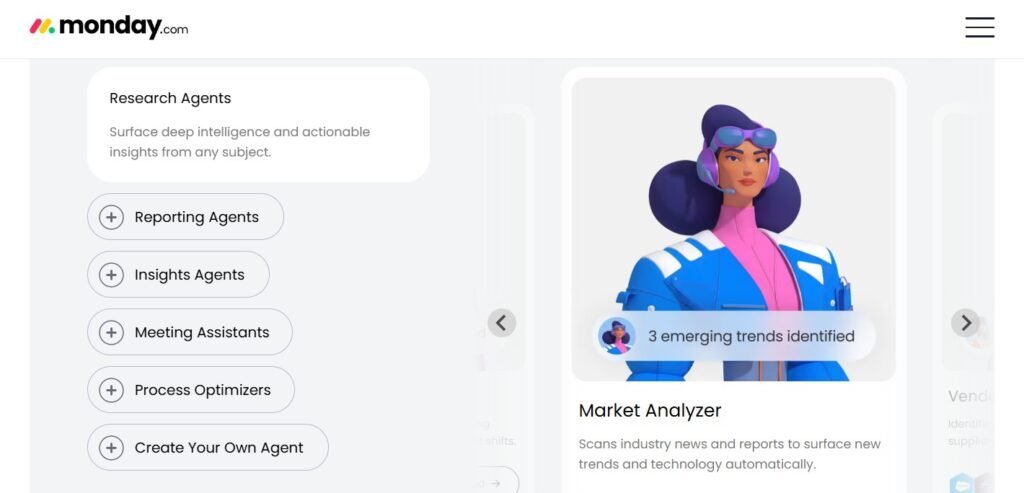
ClickUp vs monday.com comparison
| Compare | ClickUp | monday.com |
|---|---|---|
| Starting price | $7/user/mo billed annually | $9/seat/mo billed annually |
| Free plan | Yes | Yes |
| Free trial | No | Yes |
| Difficulty | Medium | Medium |
| Best for | Project and operations teams that want AI agents working inside tasks, documents, and cross-functional workflows rather than a separate chat tool. | Teams that want visual project and process management with customizable boards, dashboards, automations, and cross-team workflows. |
| Key strength | Rich project context linked to Brain², multi-model access, Super Agents, and agent workflows with approval points. | Flexible visual boards and dashboards make it easy to model many different business processes without code. |
| Main limitation | AI features are tier- and usage-dependent; workflow complexity, permissions, and credit models need management in addition to ordinary task setup. | Pricing and seat structure can become expensive for small teams, especially when advanced automation, reporting, or multiple monday products are needed. |
| Last checked | Nov 2026 | Oct 2026 |
Where each tool wins
Where ClickUp wins
- The entry price is lower: $7/user/mo, against $9/seat/mo for monday.com, both billed annually.
- Sprint management is named next to project management, and monday.com's list has no equivalent.
- Document and slide generation is a listed use case, and monday.com's list does not include it.
- Automatic status reports are listed, which reduces manual reporting work.
- Connected apps and MCP tools are named in the pros list.
Where monday.com wins
- A free trial lets you test a paid plan, and ClickUp has none.
- Resource planning is a listed use case, and ClickUp's list does not include it.
- Operations tracking and marketing workflows are named use cases.
- Many templates are listed, which gives teams a faster start.
- Mobile apps are named in the pros list.
What can you use them for?
ClickUp
- Project and sprint management
- Brain² research
- Super Agent workflows
- Document and slide generation
- Interactive dashboards and prototypes
- Automatic status reports
- Team approvals
monday.com
- Project management
- Operations tracking
- Marketing workflows
- Team dashboards
- Process management
- Resource planning
Trade-offs to consider
ClickUp
What we like
- Task and project depth
- Context-aware Brain²
- Super Agents
- Connected apps and MCP tools
- Interactive deliverables
- Human approval workflows
What to consider
- Learning curve
- AI entitlements and credits vary
- Agent output needs review
- Large workspaces can be complex
- More than basic teams may need
monday.com
What we like
- Flexible visual boards
- Strong dashboards
- Good automations and integrations
- Many templates
- Works across project and operational workflows
- Mobile apps
What to consider
- Seat-based pricing can be costly
- Free plan limited to 2 seats and 3 boards
- Advanced features require higher tiers
What decides it
ClickUp or monday.com?
ClickUp
Choose it if: Choose ClickUp if the same platform should manage projects and run context-aware AI workflows around existing tasks and documents.
Skip it if: Skip ClickUp if you need only a lightweight task list or expect its most advanced AI agents to be included without additional usage terms.
monday.com
Choose it if: Choose monday.com if your team wants visual boards, dashboards, automation, and customizable workflows that can adapt across departments.
Skip it if: Skip monday.com if you have a very small team with simple task needs, need a generous free plan, or want predictable low-cost pricing without seat-based expansion.
Frequently asked questions
Which one is cheaper?
ClickUp, at $7/user/mo billed annually. monday.com is listed at $9/seat/mo billed annually. The page does not compare what each plan includes.
Do they have a free plan or trial?
Both have a free plan. monday.com also has a free trial, and ClickUp does not.
What are the limits of the free plans?
monday.com's free plan is limited to 2 seats and 3 boards. The page does not state a limit for ClickUp's free plan.
Which one is easier to learn?
Both are rated Medium. ClickUp lists a learning curve and complex large workspaces as drawbacks, and monday.com's list does not.
Which one is better for sprints?
ClickUp lists project and sprint management. monday.com's list says project management.
Which one is better for operations and marketing teams?
monday.com lists operations tracking, marketing workflows, and process management as use cases. ClickUp's list does not include them.
Which one generates documents and slides?
ClickUp lists document and slide generation. monday.com's use case list does not include it.
Do both have dashboards?
Yes. ClickUp lists interactive dashboards and prototypes, and monday.com lists team dashboards and strong dashboards.
Do both connect to other apps?
Yes. ClickUp lists connected apps and MCP tools, and monday.com lists good automations and integrations.
Who should skip each one?
Skip ClickUp if you need only a lightweight task list or want advanced AI agents without extra usage terms. Skip monday.com if you have a very small team, need a generous free plan, or want low-cost pricing without seat-based expansion.
Compare any two tools
Use the interactive comparison tool for combinations that do not have a permanent guide yet.