

Proton VPN vs ExpressVPN
Proton VPN vs ExpressVPN: Which Should You Choose?
Proton VPN and ExpressVPN are both rated Easy, and each has one way to try it before paying: Proton through a permanent free plan, ExpressVPN through a short trial. That makes the decision about how you want to start and how much you will pay once you commit. Proton's one-month price is lower, while ExpressVPN pushes a long-term deal that is billed upfront. Read the renewal terms on both before choosing.
Choose based on how you work
Choose Proton VPN if…
Choose Proton VPN if you want a free unlimited-data VPN first, or prefer its privacy-focused approach and app transparency.
View Proton VPN details →Choose ExpressVPN if…
Choose ExpressVPN if you value easy device setup, modern VPN protocols, and clear everyday use more than the lowest possible monthly cost.
View ExpressVPN details →See the products side by side
Compare the actual interfaces to see how each tool approaches everyday work.
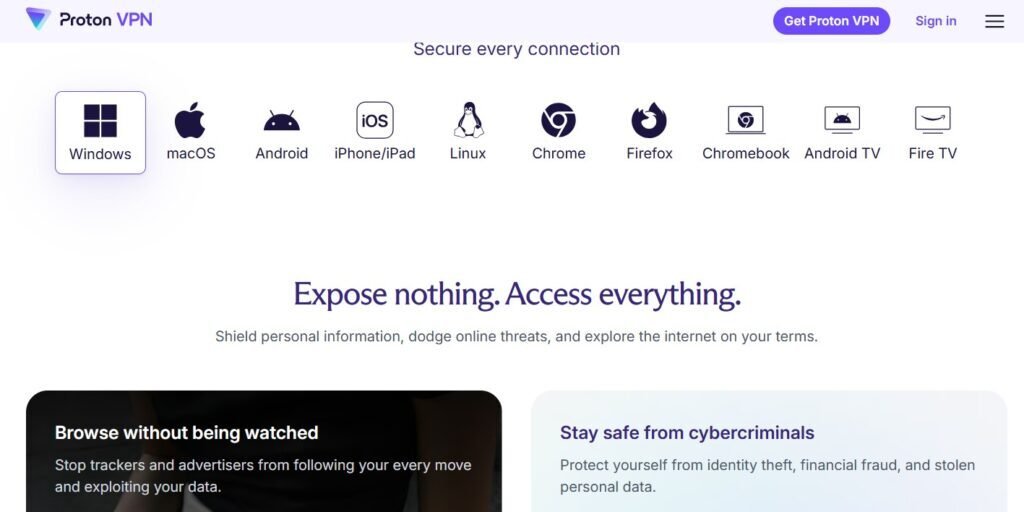
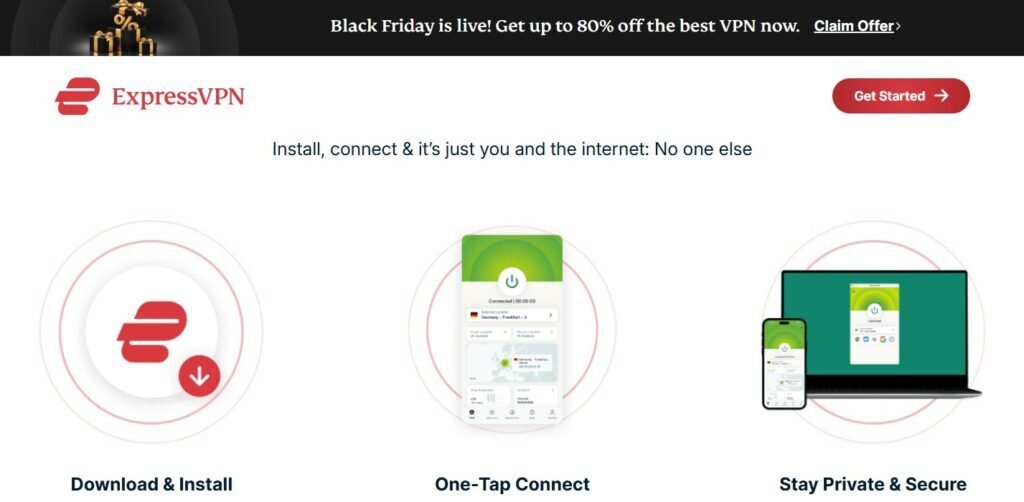
Proton VPN vs ExpressVPN comparison
| Compare | Proton VPN | ExpressVPN |
|---|---|---|
| Starting price | $9.99/mo (VPN Plus, 1-month plan; 2-year promotional equivalents vary) | $14.99/mo (Basic, 1-month indicative rate; verify checkout; introductory 28-month offer ~$3/mo, billed upfront) |
| Free plan | Yes | No |
| Free trial | No | Yes |
| Difficulty | Easy | Easy |
| Best for | Privacy-focused VPN with a genuinely unlimited-data free plan and paid advanced protection. | Premium VPN with user-friendly apps, Lightway, and broad device compatibility. |
| Key strength | Free plan with unlimited data plus transparent open-source apps and paid privacy features. | Easy-to-use apps and Lightway protocol with up to 10 simultaneous connections on Basic. |
| Main limitation | Free users are restricted to one device at a time, randomly selected free locations, and fewer premium capabilities. | No permanent free tier; one-month rates and substantial long-term offers differ, and subscriptions may auto-renew at higher prices. |
| Last checked | Nov 2026 | Nov 2026 |
Where each tool wins
Where Proton VPN wins
- The one-month price is lower: VPN Plus is listed at $9.99/mo, against $14.99/mo for ExpressVPN Basic.
- The free plan carries no advertising.
- Premium streaming and P2P are listed on VPN Plus, and ExpressVPN's list does not mention either.
- Privacy-conscious remote work is a listed use case.
- It needs no payment details to start, since the free plan is permanent.
Where ExpressVPN wins
- A 3-day trial on iOS and Android lets you test it before paying, and Proton has no free trial.
- A kill switch and leak protection are listed together, and Proton's list names neither.
- Frequent travelers are named as a target audience, and travel Wi-Fi protection is a listed use case.
- Reducing exposure of your public IP is a listed use case.
- Simple setup on major platforms is named in the pros list.
What can you use them for?
Proton VPN
- Free encrypted browsing
- Secure public Wi-Fi sessions
- Privacy-conscious remote work
- Protect laptops and phones
- Premium streaming and P2P on VPN Plus
ExpressVPN
- Protect travel Wi-Fi
- Encrypted laptop and mobile access
- Reduce exposure of public IP
- Private browsing across devices
- VPN for frequent travelers
Trade-offs to consider
Proton VPN
What we like
- Permanent free plan with unlimited data
- No advertising on free plan
- Open-source client apps
- Privacy-oriented product design
- Paid plan supports up to 10 devices
What to consider
- Free plan protects one device at a time
- Free locations are assigned automatically
- Streaming and P2P support are premium
- Paid rates depend on billing term
ExpressVPN
What we like
- Simple setup on major platforms
- Lightway VPN protocol
- 10 devices at once on Basic
- Kill switch and leak protection
- 3-day trial on iOS and Android
What to consider
- No free plan
- Premium pricing without long commitment
- Promotional rates require lengthy upfront payments
- More advanced extras depend on tier
What decides it
Proton VPN or ExpressVPN?
Proton VPN
Choose it if: Choose Proton VPN if you want a free unlimited-data VPN first, or prefer its privacy-focused approach and app transparency.
Skip it if: Skip Proton VPN Free if you need to pick any country on demand, require simultaneous device coverage, or depend on paid-only P2P features.
ExpressVPN
Choose it if: Choose ExpressVPN if you value easy device setup, modern VPN protocols, and clear everyday use more than the lowest possible monthly cost.
Skip it if: Skip ExpressVPN if you require an ongoing free tier or do not want to consider subscription renewal pricing.
Frequently asked questions
Which one is cheaper?
Proton VPN Plus is listed at $9.99/mo and ExpressVPN Basic at $14.99/mo on one-month plans. ExpressVPN also advertises about $3/mo over 28 months billed upfront, and Proton's two-year equivalents vary.
Do they have a free plan or trial?
Proton VPN has a permanent free plan and no trial. ExpressVPN has no free plan but offers a 3-day trial on iOS and Android.
Which one is easier to use?
Both are rated Easy. ExpressVPN lists simple setup on major platforms.
Can I use either one on several devices?
Yes on paid plans. Proton's paid plan supports up to 10 devices, and ExpressVPN Basic lists 10 at once. Proton's free plan covers one device at a time.
Which one supports streaming and P2P?
Proton lists premium streaming and P2P on VPN Plus. ExpressVPN's page does not mention either.
Which one has a kill switch?
ExpressVPN lists a kill switch and leak protection. Proton's pros list does not mention them.
Which one is better for travel?
ExpressVPN names frequent travelers and lists travel Wi-Fi protection. Proton lists secure public Wi-Fi sessions.
Will the promotional price last?
Not necessarily. ExpressVPN's page warns that subscriptions may auto-renew at higher prices, and Proton's paid rates depend on the billing term.
Do I have to pay upfront for the lowest price?
ExpressVPN's long-term offer is listed as billed upfront, and its page says promotional rates require lengthy upfront payments. Proton's page does not state how its two-year offers are billed.
Who should skip each one?
Skip Proton's free plan if you need any country on demand, simultaneous devices, or paid-only P2P. Skip ExpressVPN if you require an ongoing free tier or do not want to consider renewal pricing.
Compare any two tools
Use the interactive comparison tool for combinations that do not have a permanent guide yet.